
MY SUPER IKONTA 531/2
It is no secret that I love vintage photographic gear, with a sweet spot for rangefinder cameras. My first rangefinder camera was the Zeiss Ikon Super Ikonta 531/2 C, a medium-format folding camera originally belonging to my great-aunt. The camera uses 120 roll film and produces 6x9cm negatives, the largest format available in a portable folding camera.
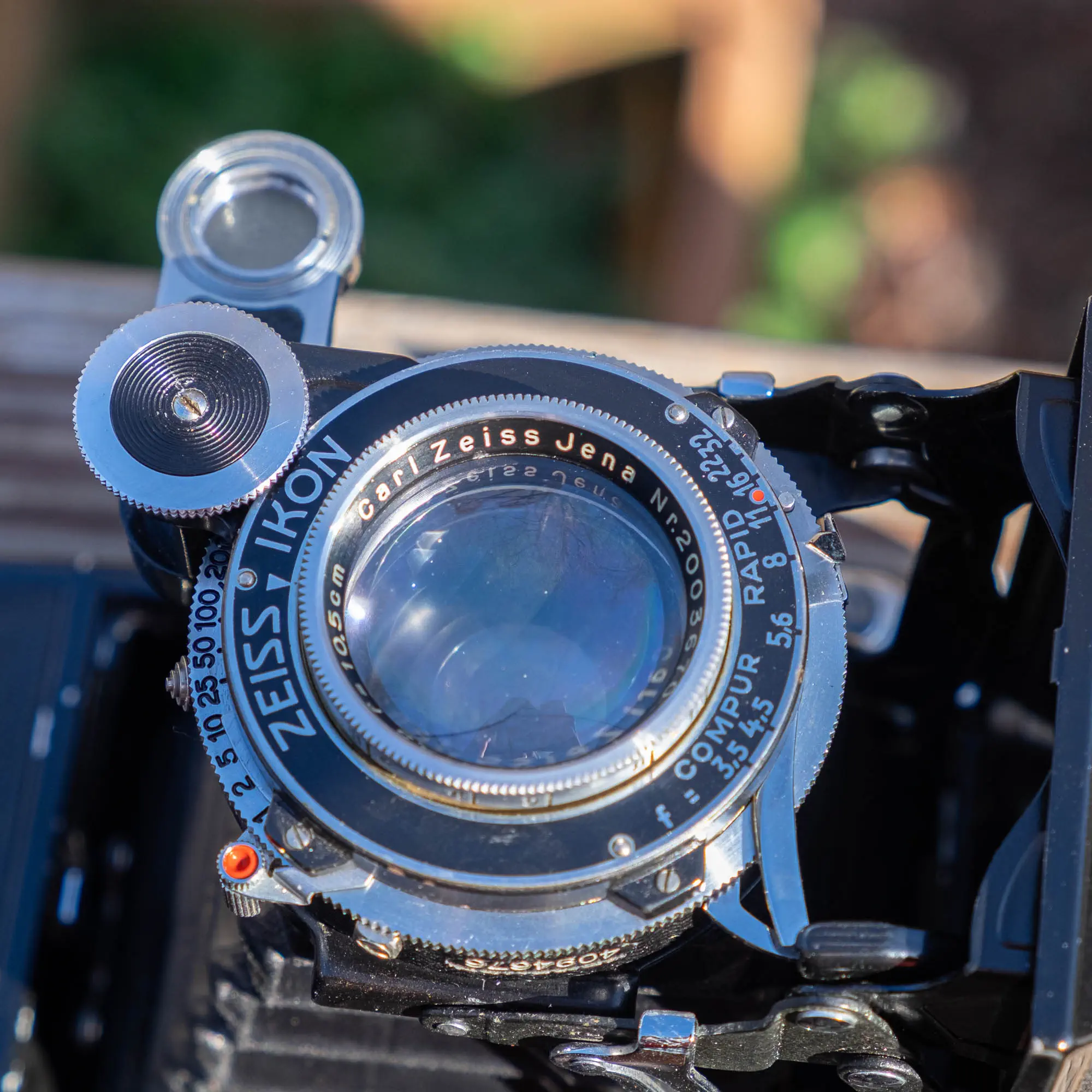
My camera is equipped with the excellent 10.5cm f/3.5 Tessar, a Compur Rapid shutter offering speeds from 1/400 to 1 second, bulb mode, an optical Van Albada viewfinder, and a coupled rangefinder. Heaven. The camera has no built-in light meter, but that’s not a problem. On bright days, I can use the Sunny 16 rule; otherwise, I use my Gossen Luna Pro light meter, which, by the way, is fantastic. There are also phone apps providing the functionality of a light meter.
Despite its age, the camera is in very good shape. The Van Albada viewfinder is not cloudy; the frame lines are still visible. The bellows are in perfect shape, with no light leaks. The button that opens the lens and viewfinder also works well. The leatherette looks excellent as well. The only visible signs of age are a few areas where the black paint is chipped. If I had to rate it, I’d say it is excellent.
Super Ikontas are beautiful, well-built, very handsome cameras. When folded flat, they are very portable and can fit in a pocket, if the pocket is big enough. However, they can easily slip into a bag or backpack. I enjoy using this camera so very much. I’m casually looking for a Super Ikonta B, which is a square-format camera.
THE AGE OF MY FOLDING CAMERA
Based on the serial numbers, my camera is presumably from 1937. The lens was produced in 1937, and the Compur Rapid Shutter, also based on its serial number, was made in 1935. The Zeiss Ikon logo imprinted on the leatherette and other locations is the older version with an edgier S in the Zeiss name. This was supposedly changed in 1936 to a more rounded S (I cannot find the reference). My camera has no serial number imprinted on the back near the door hinge or anywhere else.
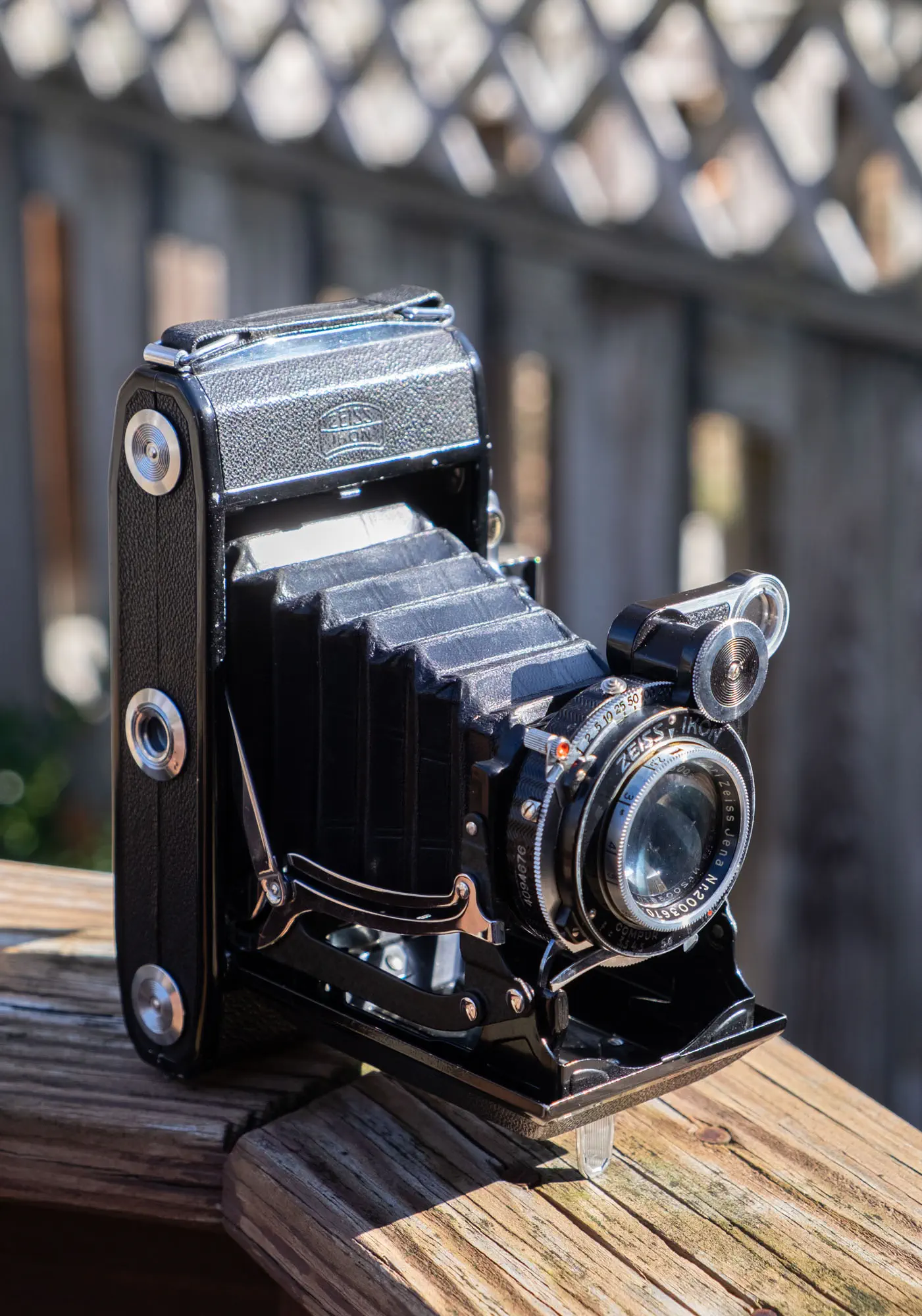
Zeiss Ikon Super Ikonta 531/2 | 105mm (45mm) | ISO 50 | Film: CineStill 50D
ZEISS IKON: THE COMPANY*
Zeiss Ikon was established in 1926 in Dresden, Germany, by merging four major camera manufacturers: Contessa-Nettel, Ernemann, ICA (International Camera Aktiengesellschaft), and Goerz. It was backed by the Carl Zeiss Foundation, famous for its excellent optical lenses.
Zeiss Ikon became a leader in camera innovation, making a wide range of products from simple box cameras to sophisticated rangefinders and folding cameras.
Zeiss Ikon was central in advancing photography during the early 20th century. Its cameras and lenses set standards for optical and mechanical quality, influencing competitors worldwide. Some famous, often-copied lens designs include Biotar, Sonnar, Tessar, and Planar. Sonnar lenses are one of my favorites.
Vintage Camera Lines
- Super Ikonta Series: A premium line of medium format cameras equipped with advanced features like coupled rangefinders and excellent optics.
- Contax Rangefinders: High-end 35mm rangefinder cameras designed to compete with Leica. And compete they did.
- Nettar and Ikonta: More affordable folding cameras for amateur photographers. They commonly lack the coupled rangefinder.
- Box Tengor: A popular box camera noted for its simplicity and reliability.
Post-War Changes
After World War II, Zeiss Ikon faced difficulties caused by the division of Germany. The company split into two entities:
- East Germany: Continued under the Zeiss Ikon name but operated independently.
- West Germany: Re-established in Stuttgart, producing modern cameras such as the Ikoflex and Contarex.
Though the Zeiss Ikon name ceased to exist as a camera brand in the 1970s, its heritage lives on through Carl Zeiss AG, which continues to produce world-class lenses and optics. Zeiss Ikon remains an iconic name in the history of photography, synonymous with quality, precision, and innovation. Like the Super Ikonta 531/2, its cameras are admired by collectors and enthusiasts as well.
*The company’s history was compiled with the help of ChatGPT.
Specs
| Maker | Zeiss Ikon |
| Model | Super Ikonta 531/2 C |
| Year Manufactured | 1937 |
| Optical Design | Tessar, 4 elements in 3 groups |
| Focal Length | 105mm (FF equivalent 45mm) |
| Aperture Range | f/3.5 – 32 |
| Number of Blades | 10, curved |
| Shutter | Compur Rapid, Leaf |
| Angle of View | 51° |
| Minimum Focus Distance | 1.5m |
| Filter Size | Φ37mm, push-on filter |
| Weight | 820g |
| Size Folded | 155x81x50mm |
| Image Size | 6x9cm (8 images on 120 film) |
HOW TO TAKE A PHOTOGRAPH WITH THE ZEISS IKON SUPER IKONTA C
Using an old camera like that isn’t as straightforward as using something more modern. Well, one could argue the opposite. Everything has to be done manually, one thing after another. From setting the aperture and exposure time, focusing the lens, cocking the shutter, and winding the film to finally pressing the exposure button. You can only press the exposure button once the film has been wound and the shutter has been cocked. This prevents accidental double exposures. After ruining a few shots by prematurely exposing the film (trigger finger), I now make sure I cock the shutter last. This camera doesn’t have a stop when you wind the film. You will have to open the little window on the back and pay attention to the dots and numbers that will appear. Don’t forget that leaving it open could cause light leaks on bright days. However, I never had an issue with this.
WHAT ABOUT THE IMAGE QUALITY?
Because it’s a medium-format camera, the image quality is really great. The Tessar lens is sharp and shows no obvious distortion. I never noticed lens flare. Maybe I instinctively use the camera in a way that prevents or minimizes this issue. Pre-WWII lenses usually lack coatings that reduce flare and improve contrast, which can lead to lower contrast in photographs. I quite like this, especially with contrasty film like CineStill.
THE PARTS OF THE CAMERA
Below is a graphic which pointers to the different parts of the camera.

1) Albada Sports Viewfinder with eyepiece 2, 3, 4) Rangefinder windows 5) Focusing wheel of the rangefinder 6) Shutter setting lever 7) Shutter speed setting ring and index 9) Aperture setting lever 8) Film Winding Key
SHOWING OFF THE CAMERA




PHOTOS MADE WITH MY ZEISS IKON SUPER IKONTA 531/2
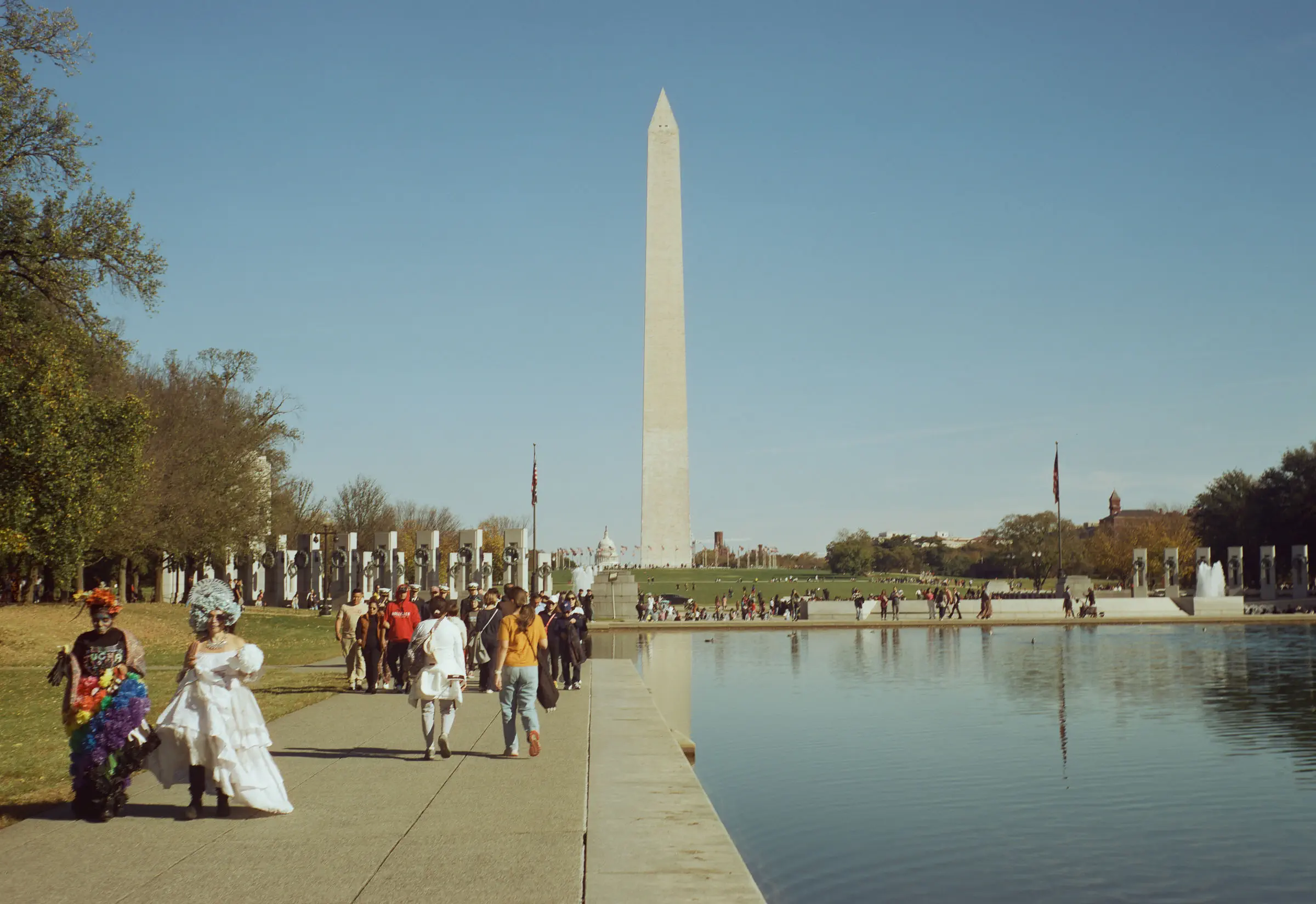
The first images below are from a recent visit to Washington, DC. I started near the Lincoln Memorial, walked along the Reflecting Pool and then to the Constitution Garden. Film: CineStill 50D. Developed and scanned by The Darkroom. This film has a distinctive retro look with nice contrast and sharpness.
The last three photos are from 2006, when I lived in Long Beach, California. Film: Agfa Optima 100 Professional. It was developed by a local place in Long Beach, CA.
Have a look at my Zeiss Ikon Super Ikonta Flickr Album, which will grow in content over time


FINAL THOUGHTS
Does using a pre-WW2 camera sound cumbersome? It isn’t once you get the hang of it. It will slow things down. Using my vintage gear compels me to change my approach to photographing the subjects that inspire me.
With a digital camera, I can be more adventurous or even wasteful, taking several pictures of each thing I want to photograph, ending up with many photos to look at afterward and sort through. I find this rather painful, looking at many images of similar things. I get eight frames per film with my lovely folder, assuming I don’t mess up. Shooting mindlessly isn’t an option.
A FEW RESOURCES
These are a couple of links that you might find useful.