
Using a vintage rangefinder camera is a fantastic experience. The one niggle is the minimum focus distance, which is approximately 1m (3 feet) or more, depending on the system and the lens’s focal length. For many situations, this is not a problem, but there are those moments when it would be nice to get closer. Meet the Zeiss Ikon Contameter. Since I use a Zeiss Ikon Contax II and two Kievs, the Contameter I’m describing here is the one numbered 1343. The other contameters should be close enough in terms of usage.
Four Different Contraptions
Zeiss Ikon produced a total of four contameters: No. 1340 for the Contax III, No. 1341 for the 6×6 Super Ikonta, No. 1342 for the Super Nettel I, II, and Nettax, and last but not least No. 1343 for Contax I, II, and Contaflex (this one needs an add-on: No. 860/44). The 1343 can be used with the Kiev II and 4a.
Update: I finally acquired a Contax IIa, and while testing the camera, I also tried the Contameter. It seems to work. I took the photo of the Hydrangeas towards the bottom of the page with the Contax IIa and the Jupiter 8 lens.
It is important to buy the one made for the camera you want to use. I bought one before that was to be used with a Super Ikonta B; I had to send it back.
The Contameter
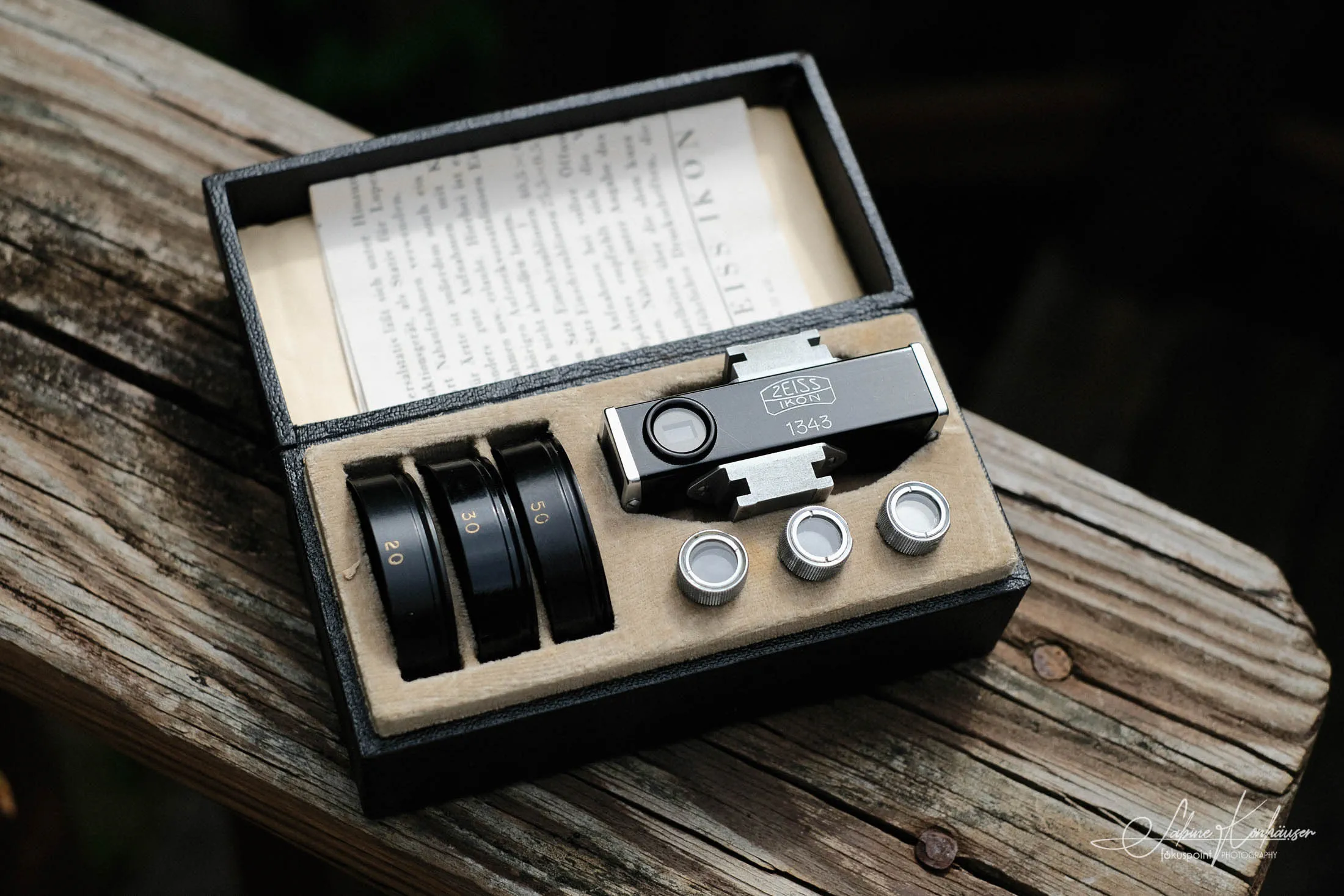
The Contameter is a precision optical tool produced in Dresden from the 1930s until World War II. It consists of a close-range rangefinder that must be mounted on the camera’s accessory shoe, three small rangefinder lenses labeled 20, 30, and 50, and three front close-up lenses, also labeled 20, 30, and 50.
The chosen lens determines the focus distance: ’20’ means 20cm, ‘30’ means 30cm, and ‘50’ means 50cm; no surprise here. The focus distance is the distance from the front close-up lens to the object you want to photograph.
There are two sets of close-up lenses. One is for 50mm Sonnar lenses (994/34), and the other is for 50mm Tessar lenses (994/35). Make sure you get the correct close-up lenses.
How to use the Contameter
This contameter (1343) is made for 5cm/50mm lenses. You can use the original Zeiss lenses or the much less expensive Jupiter-3 or Jupiter-8 lenses. I haven’t tried the Jupiter 8M or the Helios-103, so I can’t offer an opinion here at this point.
First, select the focus distance. I find 20 to be a bit close, 50 not close enough, and 30 just right in many scenarios.
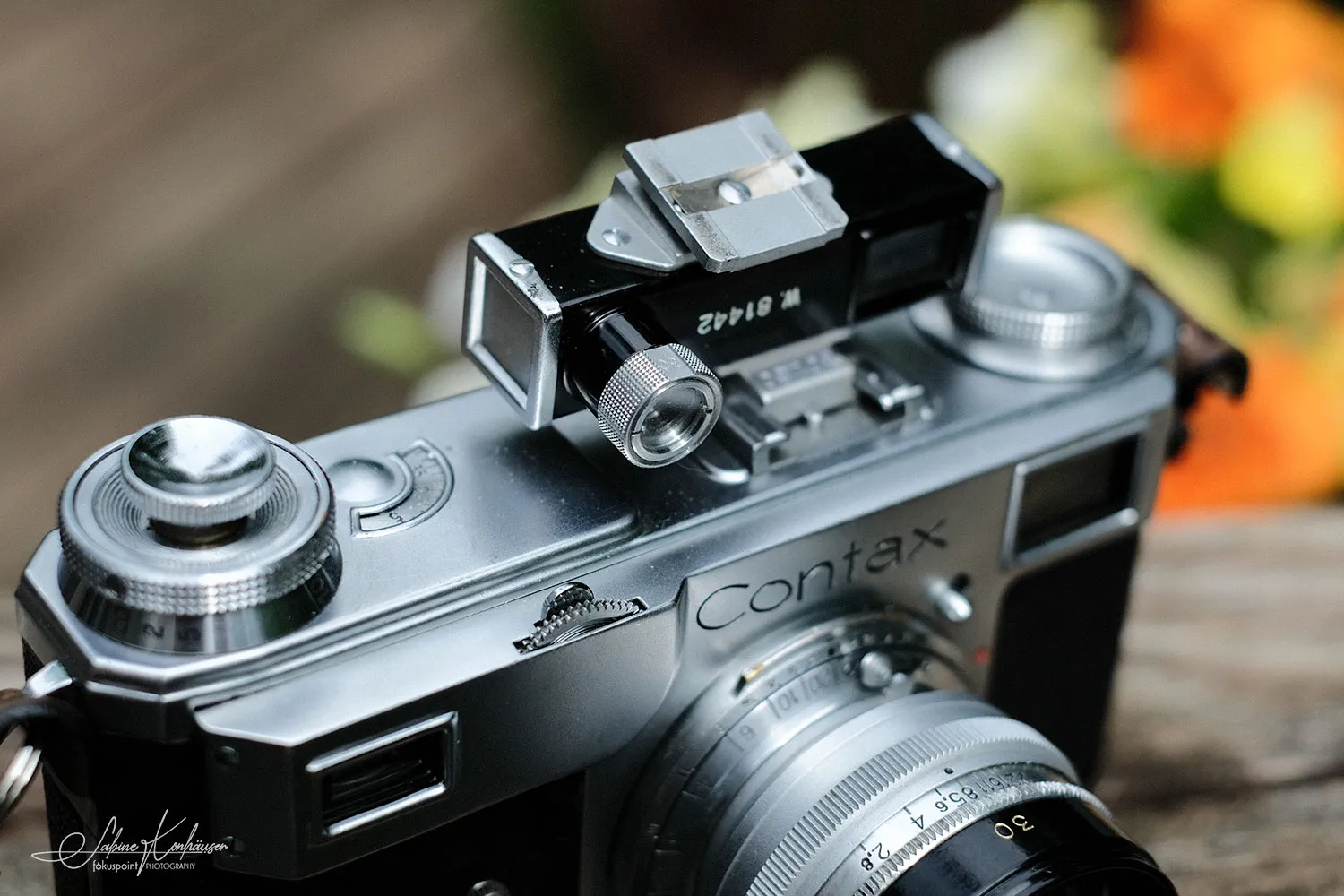
Mount your 50mm lens on your camera and set it to infinity (the lens is locked) – this is important. Select the aperture. When handheld, it should be f/8 or smaller. The depth of field will be very shallow, so make sure that whatever you want in focus has a chance to be in focus. You are still using a rangefinder, and you cannot tell if your object is actually in focus. Using a smaller aperture gives you a better chance of getting the image you want. If you decide to use a tripod (a good choice), you can use a larger aperture. A focusing rail would be best; repositioning the tripod could prove to be frustrating.
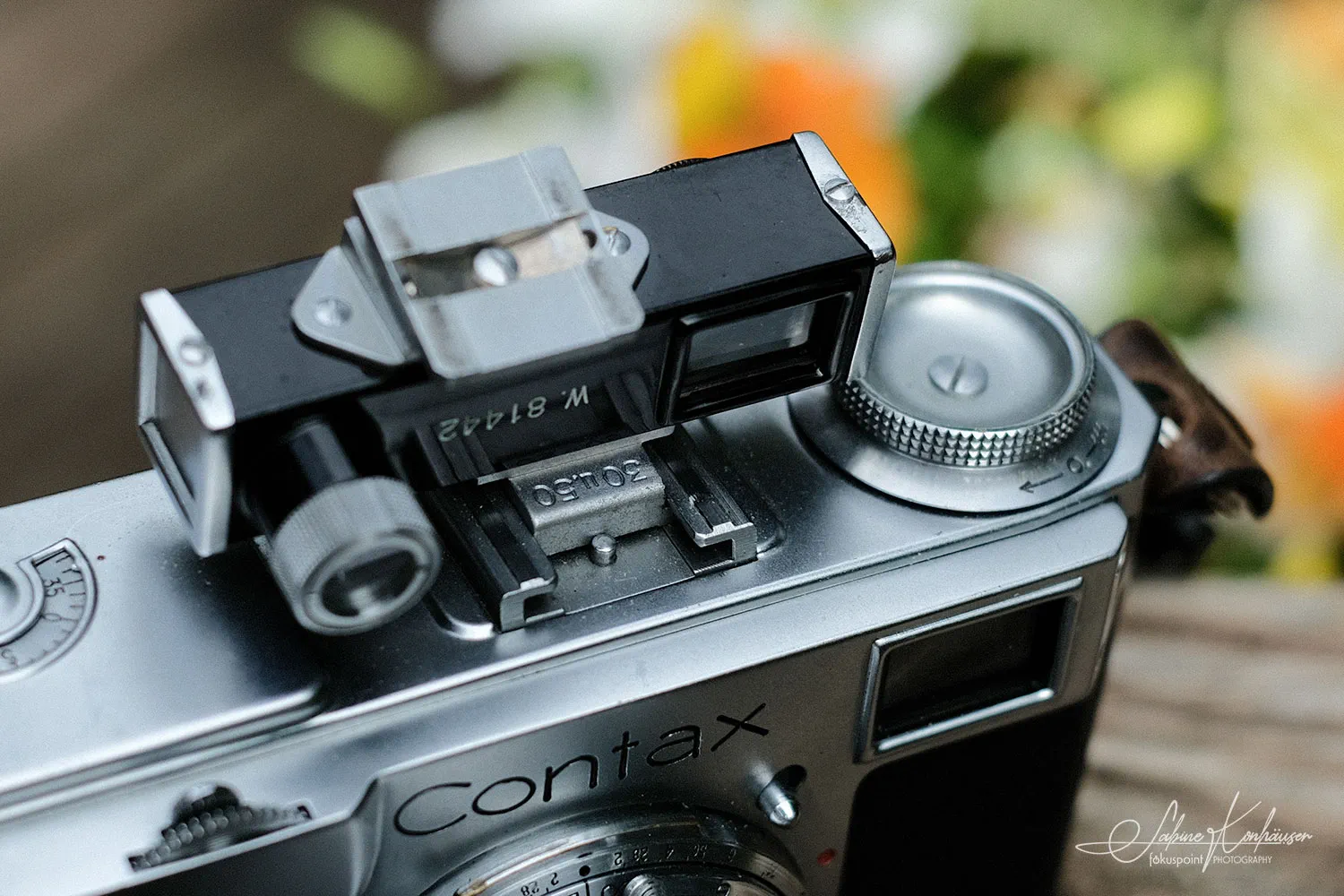
Attach the close-range rangefinder to the accessory shoe. You can see two mounting shoes. One side says 30 u. 50, the other 20. If you use the 30 or 50 lens set, for example, the side marked “30 u. 50” goes into the accessory shoe (see image).
Mount the close-up lens to the front of your lens.
Place the small rangefinder lens in the opening. There is a small pin on the lens that needs to be aligned with a small notch. The little lens needs to sit flush. This small lens needs to have the same number as the close-up lens.
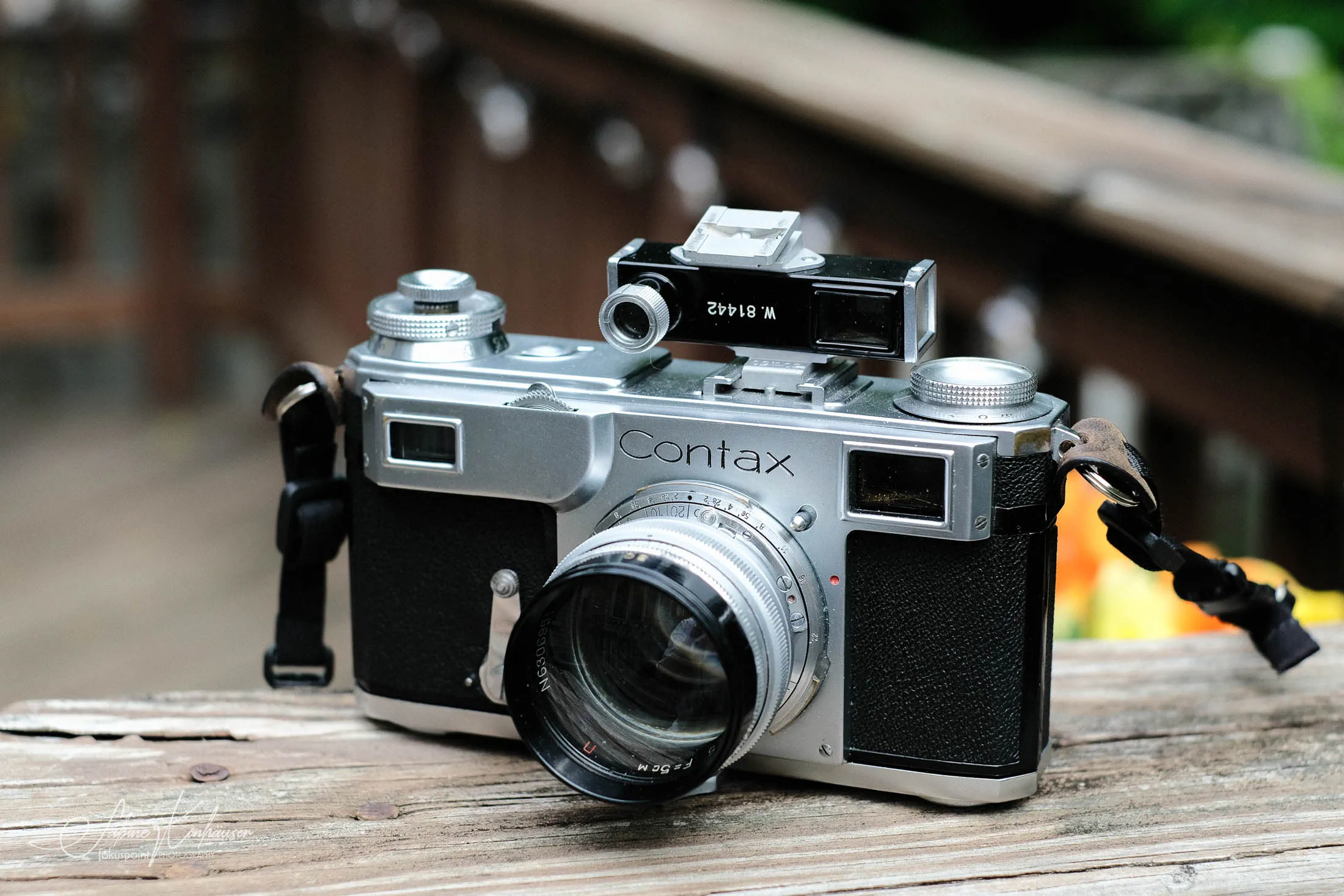
The rangefinder sits in its shoe, the close-up lens is mounted to the lens, and the little rangefinder lens sits in its location as well.
How to Focus
You cannot use the regular viewfinder to focus. You will need to use the Contameter’s viewfinder. To get focus, move the camera towards or away from your object until the rangefinder patch is aligned. That’s why I recommend using a focusing rail with a tripod. It would be difficult to move the entire tripod to get your object into focus. We are talking about very small movements. Don’t use your lens to focus; it needs to stay at infinity.
Some Technical Data
Diameter of the circle of confusion: 0.05mm
The table below shows the depth of field (mm) for the three close-up lenses at f/4, f/8, and f/16. The focal distance is not distributed evenly. Typically, you’ll have a larger depth of field behind the point of focus. The depth of field in front of the point of focus is listed in the columns named front, and the depth of field behind is listed under back.
| f/4 | f/8 | f/16 | ||||
|---|---|---|---|---|---|---|
| front | back | front | back | front | back | |
| Close-up 20 | 3 | 3 | 6 | 7 | 11 | 13 |
| Close-up 30 | 8 | 8 | 15 | 17 | 29 | 36 |
| Close-up 50 | 19 | 20 | 36 | 42 | 66 | 93 |
Example Images

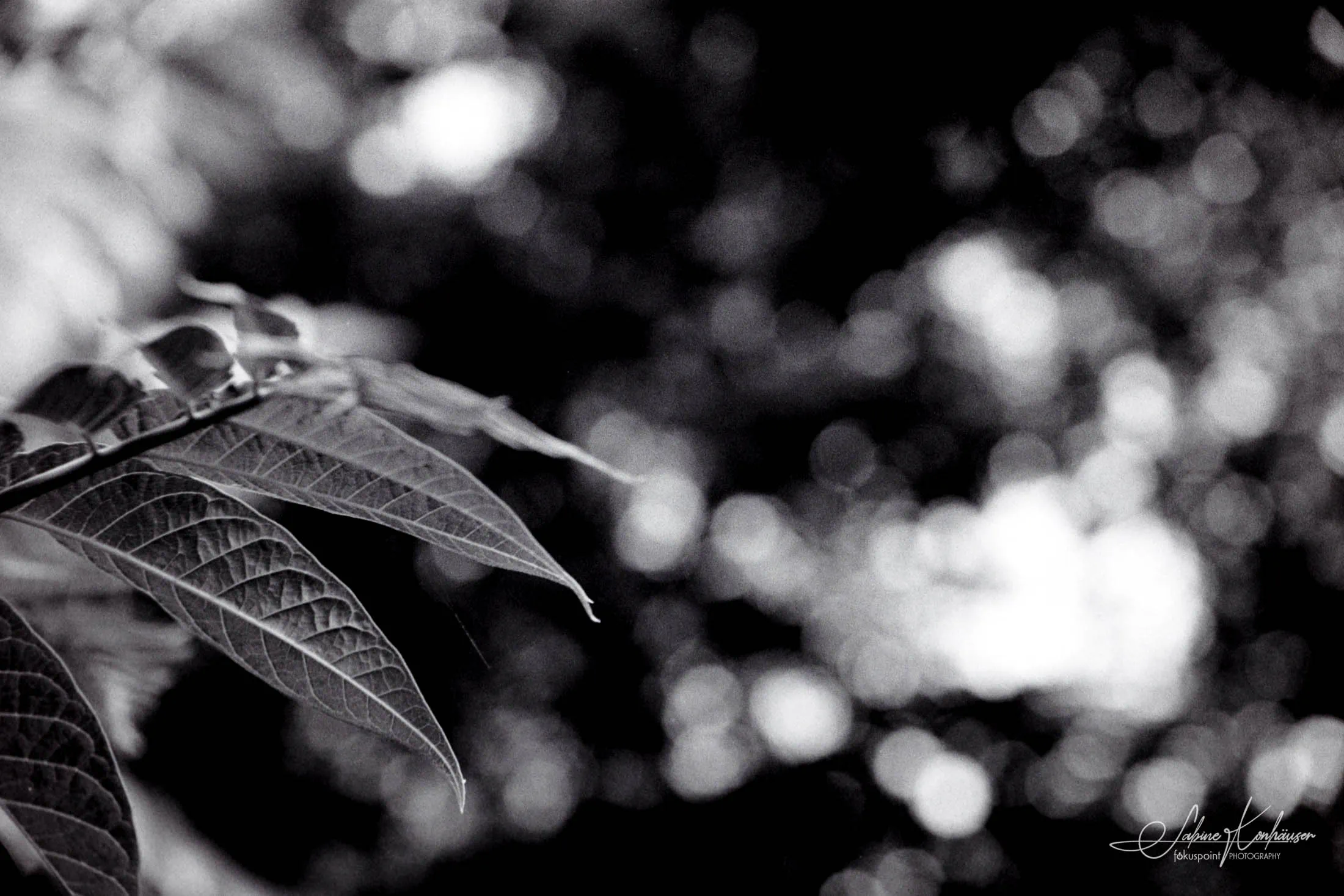
Kiev IIa | Jupiter-3 50mm f/1.5 | AgfaPhoto APX 100 | f/4 | ISO 100 | Lens Set 20
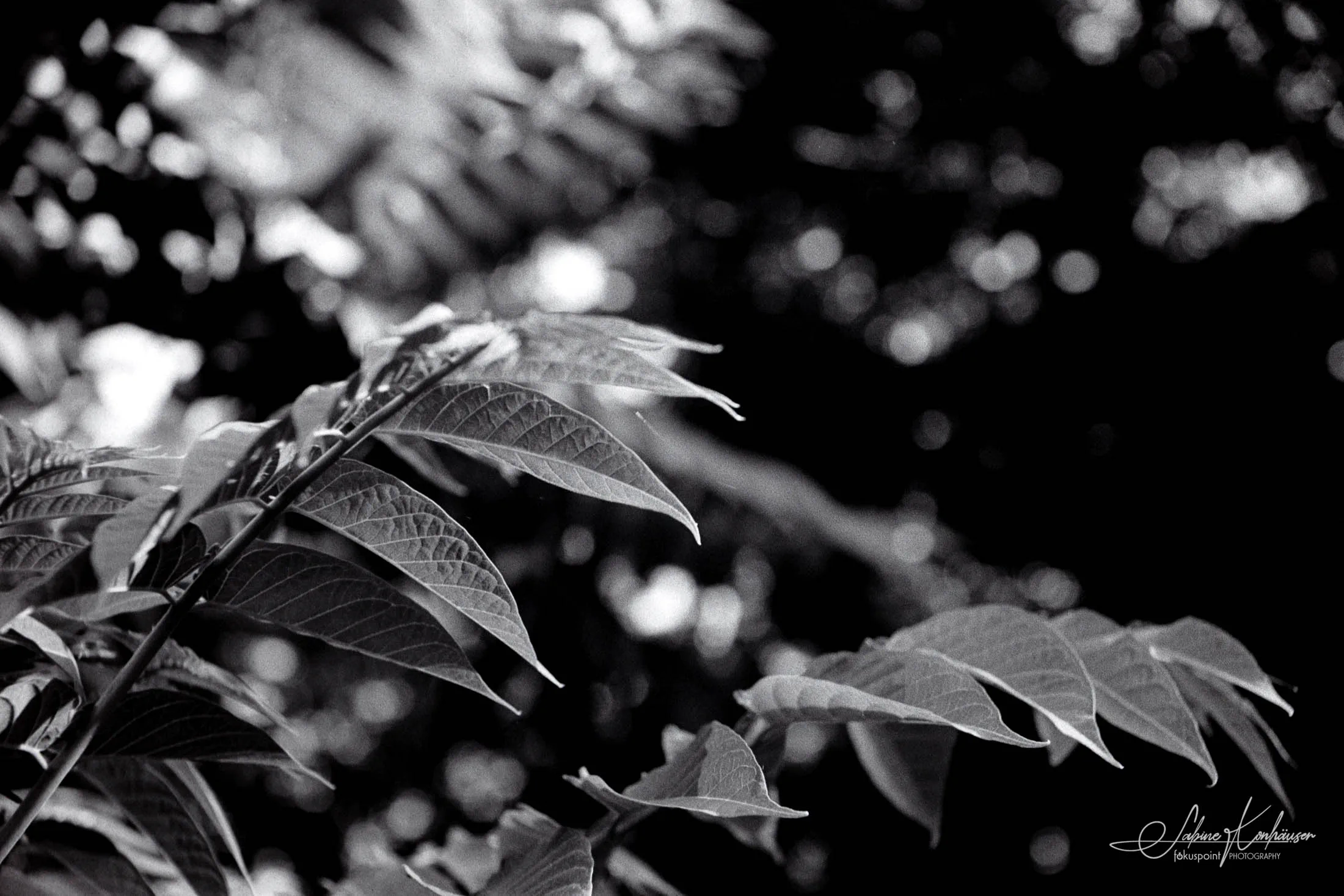
Kiev IIa | Jupiter-3 50mm f/1.5 | AgfaPhoto APX 100 | f/8 | ISO 100 | Lens Set 30
Kiev IIa | Jupiter-3 50mm f/1.5 | AgfaPhoto APX 100 | f/8 | ISO 100 | Lens Set 50

Zeiss Ikon Contax IIa | Jupiter-8 50mm f/2 | AgfaPhoto APX 100 | f/8 | 1/250 sec | ISO 100 | Lens Set 30

Zeiss Ikon Contax IIa | Jupiter-8 50mm f/2 | AgfaPhoto APX 100 | f/8 | 1/250 sec | ISO 100 | Lens Set 30
Last Thoughts
Who says you cannot do close-up photography with a rangefinder camera? Mind you, this is not macro photography, which is better served by an SLR or a mirrorless camera. However, it will allow you to take photos at a much closer distance, with a shallow depth of field and the potential to capture some nice bokeh that your lens is known for.
Is it casual? No, not really. But using a film camera, a vintage rangefinder at that, with all its imperfections, isn’t as casual as using a digital camera either. Is it fun? You bet it is. Photography is not my profession, but my love, so I can indulge in old cameras that slow me down, in vintage lenses that may not be up to standard for many, try these old contraptions, have a great time doing so, and love at least some of the photos I take with my vintage gear. So yeah – loads of fun.
Yes, it is worth using a Contameter, provided you can get one for your camera at a reasonable price and in good working order. Don’t spend a large amount on these things. It will not allow you to take macro photos, even with a Contameter; it will be difficult to keep the object in perfect focus at a close distance. There are definitely limitations to what you can do. But yes, it is worth it.
Last bit of information: I do like AgfaPhoto APX 100 a lot; it is the same film as Kentmere Pan 100. The images have been developed in Rodinal at a dilution of 1:50, with gentle agitation for the 1st minute, then 5 seconds every minute. I do like Rodinal quite a bit.
Find more info about my gear on my about page.